
The Complete Wing Foiling Guide – Equipment, Safety Tips & More
Suppose you’re a watersports enthusiast looking for a new challenge or simply new to aquatic competitions and are after a place to start; why not take on the relatively new task of wing foiling? Wing foiling could be your next favourite hobby. Experience the exhilarating highs and adrenaline found in all other watersports while taking on a completely fresh test in the water.
But what is wing foiling? How does it work? Is it safe? What do you need to take part in it? Our comprehensive wing foiling guide answers all these questions and more. At Pinnell & Bax, we’re experts in all things watersports, so read on to learn more from our experience and knowledge in the wing foiling field.
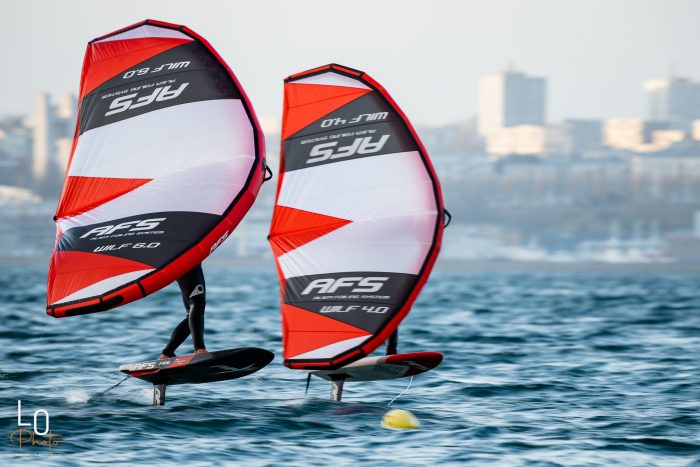
Table of contents
- What is wing foiling?
- What equipment is used in wing foiling?
- How to stay safe while wing foiling
- What are the best conditions for wing foiling?
- Wing foiling at P&B
What is wing foiling?
Firstly, let’s clarify what wing foiling entails. While standing on a board, foilers will hold onto a wing that has an inflated leading edge. Riders will use the large wing to direct themselves and power forwards. The wing generates upward and sideways force to move the board across the water.
The relatively recent emergence of wing foiling from the early 1980s means the young sport is still developing and there are constant changes to disciplines and technology for the equipment.
While experience in other watersports may give you a slight head start, no previous experience in dinghy sailing, surfing or other sports is required when learning wing foiling. The challenge will come in judging the wind and how much you’ll need to power yourself forward. With any watersport, we recommend lessons with qualified instructors to understand the basics and start your journey. Find out more on how to book lessons via the RYA website.
What equipment is used in wing foiling?

We’ve mentioned that boards and wings are involved in wing foiling, but what makes these specific boards and wings suitable for the sport? Let’s take a look at everything you need for wing foiling and the role each item plays.
Boards
Wing foiling comes into its own with its boards. The sport requires the board to have a hydrofoil attached underneath so the board itself sits above the water. Hydrofoils operate as a lifting surface for the board, hoisting it up from the water. Many boards in our collection are designed for newcomers to start winging with assistance on how to stay upwind.
Wings
Arguably, the wing itself is the most important piece of wing foiling equipment! The inflatable wing is your tool of direction. Its light and easy-to-hold frame makes manoeuvring the wing simple and easy to pick up quickly. Generate power and glide across the water at pace with a steady and adaptable wing.
Other equipment
Alongside all the wing foiling-specific gear, ensure you’ve got a wetsuit before you take your first lesson. A neoprene wetsuit will help your body temperature remain comfortable in the water. It allows a small amount of water into the suit to be insulated between your body and the neoprene, keeping you warm in the cold and preventing overheating in summer.
You’ll also need a buoyancy aid to assist you should you end up in the water, and we recommend helmets for those in the learning process.
How to stay safe while wing foiling
Any water sport has rules to abide by and respect, and wing foiling is no different despite its infancy. Follow our key tips listed below:
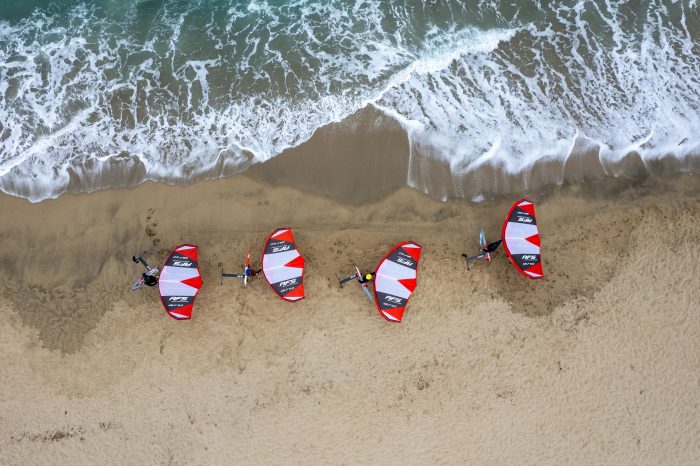
- Always look for an easy access point to enter the water, avoiding big shore breaks that could damage your equipment and put you at risk.
- Keep control as you carry your board. Point the foil windward and carry your wing in the other hand, preventing the foil from tearing the wing.
- When looking for your launching spot, be wary of the water depth. Don’t start from areas with rocks or reefs. Instead, walk out until the foil is above the seabed.
- Avoid rocks and cliffs when riding. Only sail in permitted areas that have easy access back to the beach.
- Practice in groups so that if one of you requires emergency assistance, the others can call.
- Do not wing foil in very extreme conditions. Avoid going out if waves are 5ft or over.
What are the best conditions for wing foiling?
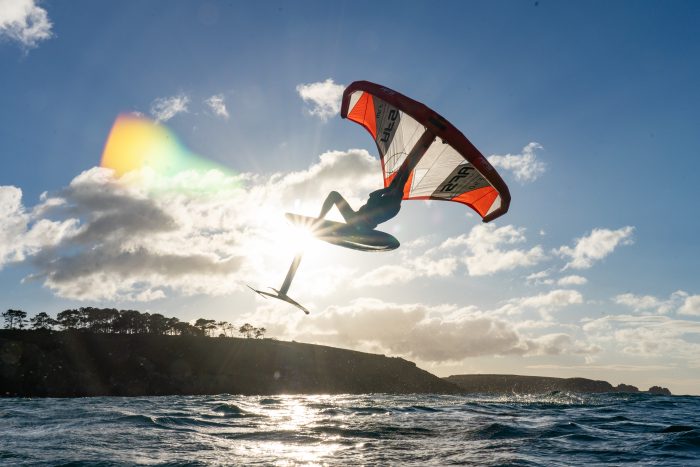
While it’s important to know when to avoid picking up your board and heading to the water, it’s useful as a beginner to know when the conditions benefit you most. As with most watersports, flat water will serve you best, especially if you’re just getting started.
Wind is essential, given the nature of the sport. When first learning your craft, the wind’s direction and speed must be considered. For beginners, 13-15 knots of wind is the ideal speed. You may struggle to take off at just 13 knots, but it’ll help you smoothly find your bearings on your board. A side-on wind (from the sea to the beach) is the ideal wind direction for beginners. Onshore or offshore winds could pose too big a challenge early on.
Wing foiling at P&B
So, after learning about the exciting ins and outs of wing foiling, are you ready to give it a go yourself? If so, that’s great! At P&B, we have a passion for watersports; if you share those passions, we have much more to offer you. Browse our site and discover products from leading brands such as the globally trusted AFS, Ocean Rodeo, and Slingshot.
Shop all things watersports at P&B for the best quality from a World Championship-winning brand dedicated to providing you with the best kit and expert advice.
Comments are closed here.