
How to Care for Your Wetsuit – The Complete Guide
A wetsuit is more than just gear; it’s a sailing or surfing enthusiast’s best friend. By showing your wetsuit the proper TLC, you’re not just maintaining it but investing in its longevity. Your suit will stay fresh, clean, and odour-free, just like the day you bought it. Good care and cleaning will also help extend the suit’s lifespan, ensuring you get the most out of your investment.
Wetsuit care is essential, and at Pinnell & Bax, our knowledge and experience in wetsuits and sailing clothing mean we know the best tips and practices to keep your suit feeling fresh in every wear.
Follow our guide to know what to do and what not to do to maintain a healthy wetsuit.

Table of contents
- How to wash your wetsuit
- How to dry your wetsuit
- How to wash & dry wetsuit boots
- Best way to store your wetsuit
- What to avoid when caring for your wetsuit
How to wash your wetsuit
Saltwater can have lasting effects on any piece of clothing, even those designed to withstand it, so a freshwater rinse after each wear may not be enough. Be sure to give your wetsuit a true deep clean every few wears. To do this, you’ll need a bottle of special neoprene soap/shampoo, which you can get from any surfing or sailing shop.
Rinse your suit thoroughly and submerge it in freshwater. Then, add the neoprene product and follow the bottle’s instructions. Give it one more rinse before squeezing out excess water to ensure a thorough clean.
How to dry your wetsuit
To dry your wetsuit normally, turn it inside out and hang it halfway through a regular clothes hanger. Hanging the wetsuit from the neck or shoulders can cause unwanted stretching, leading to fitting difficulties over time. Find a shady area to hang the wetsuit, ideally somewhere breezy, to help the process. Avoid hanging the suit in direct sunlight, as UV rays can break down neoprene.
When the outer side feels dry, normally, after a few hours, flip the suit inside out and repeat the process. Do your best to avoid leaving the wetsuit out overnight, as it will become damp.
Drying outside is ideal in late spring and summer but less so in colder months, so when autumn and winter rear their chilly heads, dry indoors in a well-ventilated room. Over showers or bathtubs in bathrooms is ideal, while poorly ventilated rooms such as garages won’t be helpful.
If you need your wetsuit ready quickly, we have a few tips on how to get a dry wetsuit as soon as possible:
- After rinsing, hang halfway through a wide hanger over a shower or bathtub in a ventilated bathroom.
- Squeeze excess water out of the arms, starting at the shoulders and working down. Repeat with the lower area of the suit.
- Leave the wetsuit for half an hour before repeating the previous step.
- Once the outer is dry, flip the suit around and repeat the squeezing every 30 minutes until dry.
How to wash & dry wetsuit boots
As with any footwear, consistent use of wetsuit boots can lead to less than pleasant odours. The somewhat peculiar shape of wetsuit boots can often make drying difficult, so knowing how to wash and dry your boots properly is essential to maintaining a healthy pair.
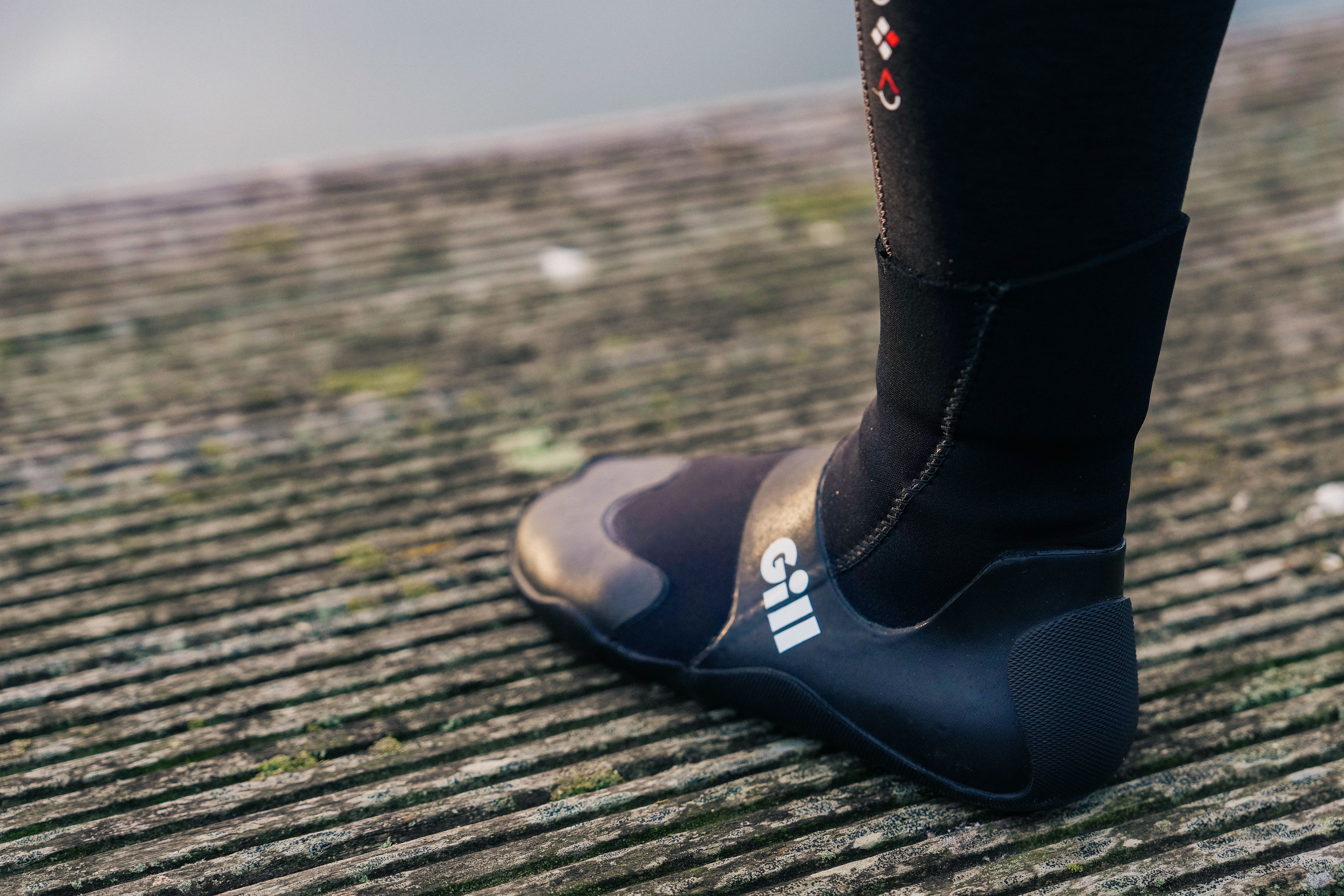
Rinse your boots thoroughly after each wear. After rinsing, roll down the tops of your boots and hang them upside down to allow air circulation. We recommend washing your boots with neoprene soap every few wears to keep them fresh.
Best way to store your wetsuit
While washing and drying your wetsuit are much more active maintenance tasks, knowing how to store your suit properly is just as important. If you’re simply putting on a wetsuit that you plan to wear again soon after it’s dried, placing it in a wardrobe should suffice. Avoid leaving your suit in the garage as it can become damp.
Seasonal wetsuits are a slightly different matter. The wetsuits you use during winter will be stored away for months during the summer and vice versa, so how do we make sure we’re looking after our wetsuits even when they’re not active?

Ensure your inactive wetsuits are only stored once they are completely dry. The last thing you want is mould developing and ruining a perfectly good wetsuit. Store the suit lying flat to avoid stretching. If you don’t have adequate space to lay the suit, your next best solution is to use a broad-shoulder hanger. Avoid wire hangers and folding the suit for long periods, as the creases may damage the neoprene.
Keep your wetsuit out of direct sunlight and at room temperature to further assist the health of the neoprene. Follow these instructions and you’ll have a ready-to-go wetsuit at the start of the season.
What to avoid when caring for your wetsuit
Knowing what to avoid when caring for your wetsuit is just as important as knowing how to wash and dry it properly. As you may have noticed in our washing instructions, the key one is that wetsuits are not machine-appropriate for washing. In addition, never put your wetsuit in the tumble dryer.
We’ve mentioned using neoprene soap to clean your wetsuit, and this is because it’s the most effective and safe option. Regular laundry detergent is not suitable and can lead to damage. Avoid drying in direct sunlight and folding your wetsuit when storing it away.

Your wetsuit is prone to sharp objects, just like any clothing! Ensure you give your suit a thorough welfare check after each wear to identify any cuts or snags. Browse our wetsuit maintenance products for neoprene contact cement for DIY repair.
Wetsuits at Pinnell & Bax
Now you know exactly how to care for a wetsuit, why not browse our extensive collection of highly technical suits available for men, women, and children at Pinnell & Bax? We stock wetsuits from the world’s leading brands, such as Zhik and Gill, so you can shop safe in the knowledge that you’re only seeing the best.
Achieve and maintain top performance with wetsuits that support you through every sail, surf, or swim.
Comments are closed here.