
Essential Sailing Knots Everyone Should Master
Imagine being out on the water, the wind is up, and a crucial piece of gear needs securing fast. You reach for the line, and that moment of pressure reveals a fundamental truth about seamanship: your mastery of sailing rope knots is paramount. Whether you are racing for a podium finish or simply dropping anchor for a quiet afternoon cruise, confidence in your knot-tying ability is directly linked to the safety and efficiency of your vessel.
This guide is designed to equip you with the fundamental skills necessary for water activities. By the end, you will have simple, reliable instructions for the essential knots that every serious sailor, and indeed every boat owner, should know by heart.
Table of contents
- Why learning how to tie knots is important
- The essential sailing knots you need to know
- Shop high-quality sailing rope at P&B
Why learning how to tie knots is important
Learning to tie reliable sailing knots is not a complicated academic exercise; it is an immediate investment in your security and performance. For the high-performance sailor, a precisely tied knot means minimum slip, maximum strength, and the ability to release lines under heavy load quickly, offering a crucial competitive edge.
For the casual or cruising sailor, these knots ensure that mooring lines hold firm in a squall, that fenders stay exactly where they are placed, and that costly equipment remains secured.
Ultimately, a knot that fails at a critical moment is not just inconvenient; it can be genuinely dangerous. Practise these techniques ashore and enjoy the peace of mind that comes from being truly prepared for any eventuality on the water.
The essential sailing knots you need to know
The world of knotting can seem vast, but sailing relies on a handful of foundational types. We will be covering various categories, including bends (used to join two lines), hitches (used to attach a line to an object like a post or spar), and loops (used to create a non-slip eye at the end of a line). Each knot detailed below serves a specific, indispensable function aboard any vessel, making them the core curriculum for mastering your lines.
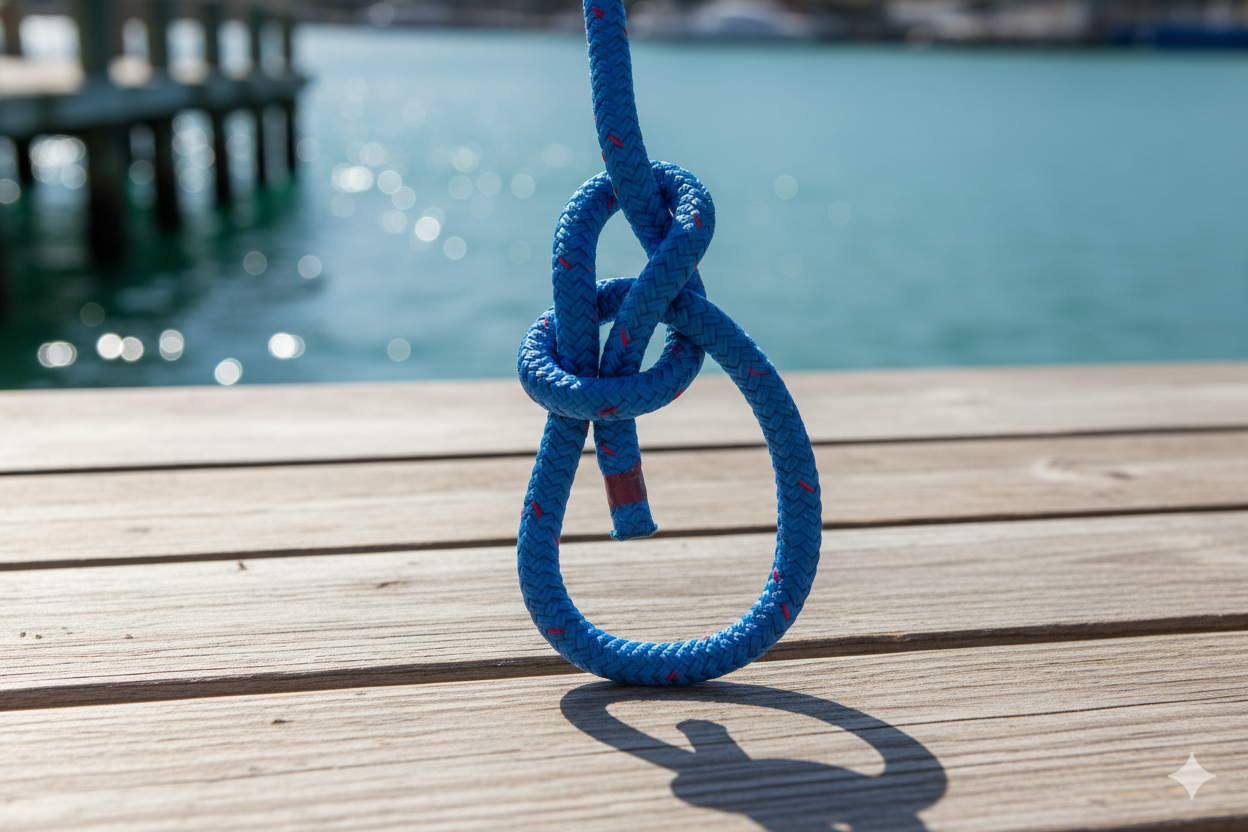
Bowline
The Bowline is often referred to as the “king of knots,” and with good reason.
Key Function: Creates a reliable, non-slip loop at the end of a line. It is easy to tie and, crucially, easy to undo, even after being subjected to a heavy load.
Instructions:
- Form a small overhand loop (often called a ‘bight’) in the standing part of the line. Ensure the working end is underneath the standing part as it forms the loop.
- Take the working end (the tail) and pass it up through the loop you just created.
- Bring the working end behind the standing part of the line.
- Feed the working end back down through the original small loop.
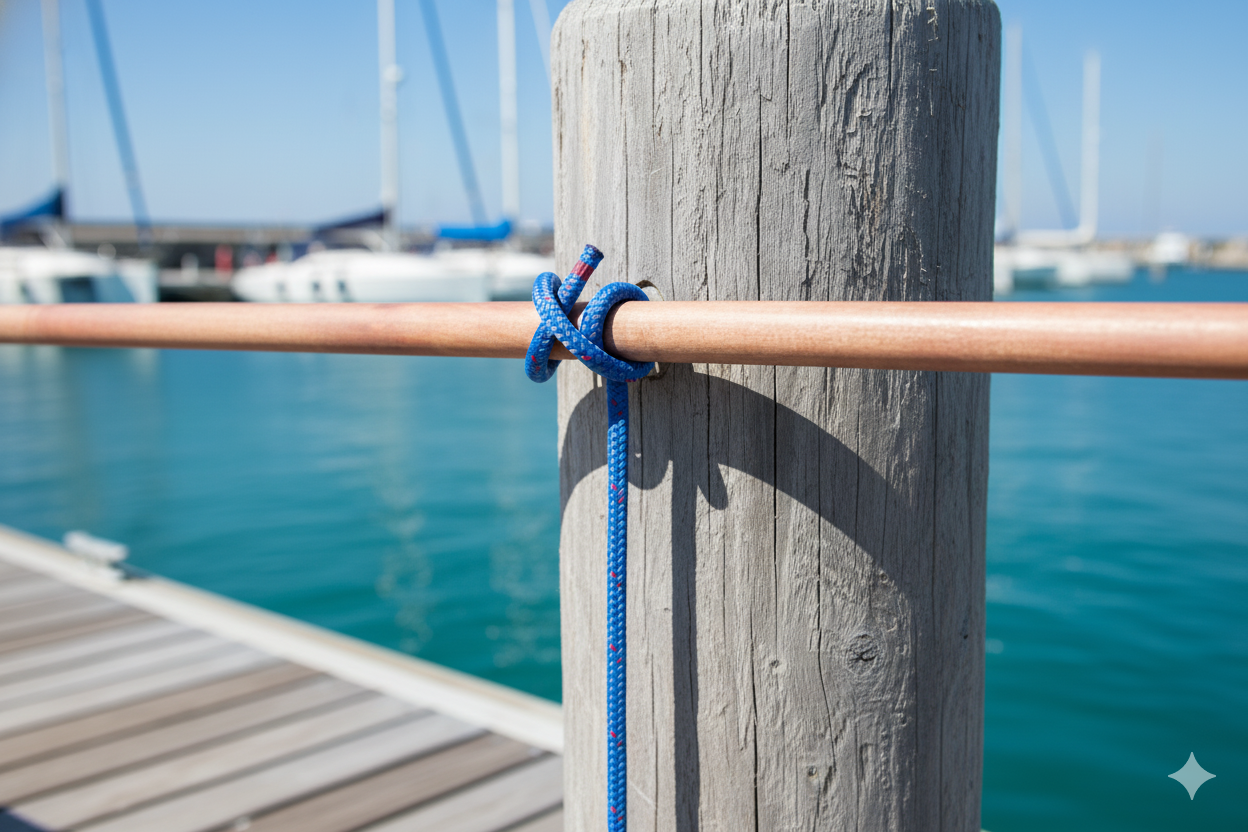
Clove Hitch
The Clove Hitch is fast to tie and simple to adjust, making it the perfect temporary fastening.
Key Function: Quickly attaching a line to a spar, rail, or post. It is primarily used for fenders and temporarily securing lines.
Instructions (Tying over an object):
- Wrap the working end completely around the object (like a railing or spar).
- Cross the working end over the standing part and continue around the object a second time, parallel to the first wrap.
- Feed the working end underneath the second wrap before pulling it tight.
- Ensure both turns pull securely against the object, and dress the knot so the working end tucks neatly under the line.
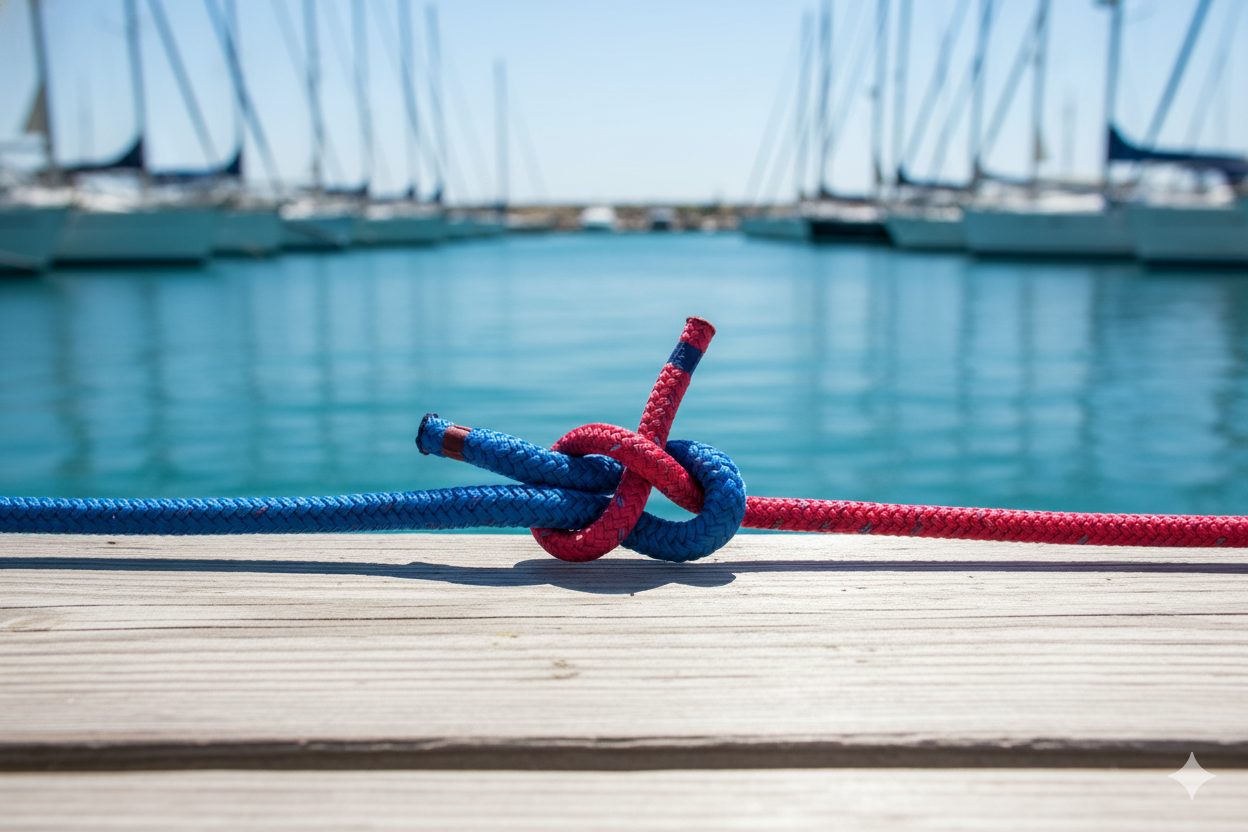
Sheet Bend
When you need to join two ropes together, particularly if they are of different diameters, the Sheet Bend is the knot to master.
Key Function: Joining two ropes of equal or unequal size, maintaining strength even with slippery or wet lines.
Instructions:
- Take the larger of the two ropes and form a simple U-shape (a bight) at its end. This is your foundation.
- With the working end of the second, smaller rope, pass it up through the bight from below.
- Wrap the working end around the back of the entire bight.
- Tuck the working end under its own standing part where it emerges from the bight.
- Pull the two standing ends and the two working ends simultaneously to tighten the knot and lock the ropes together.
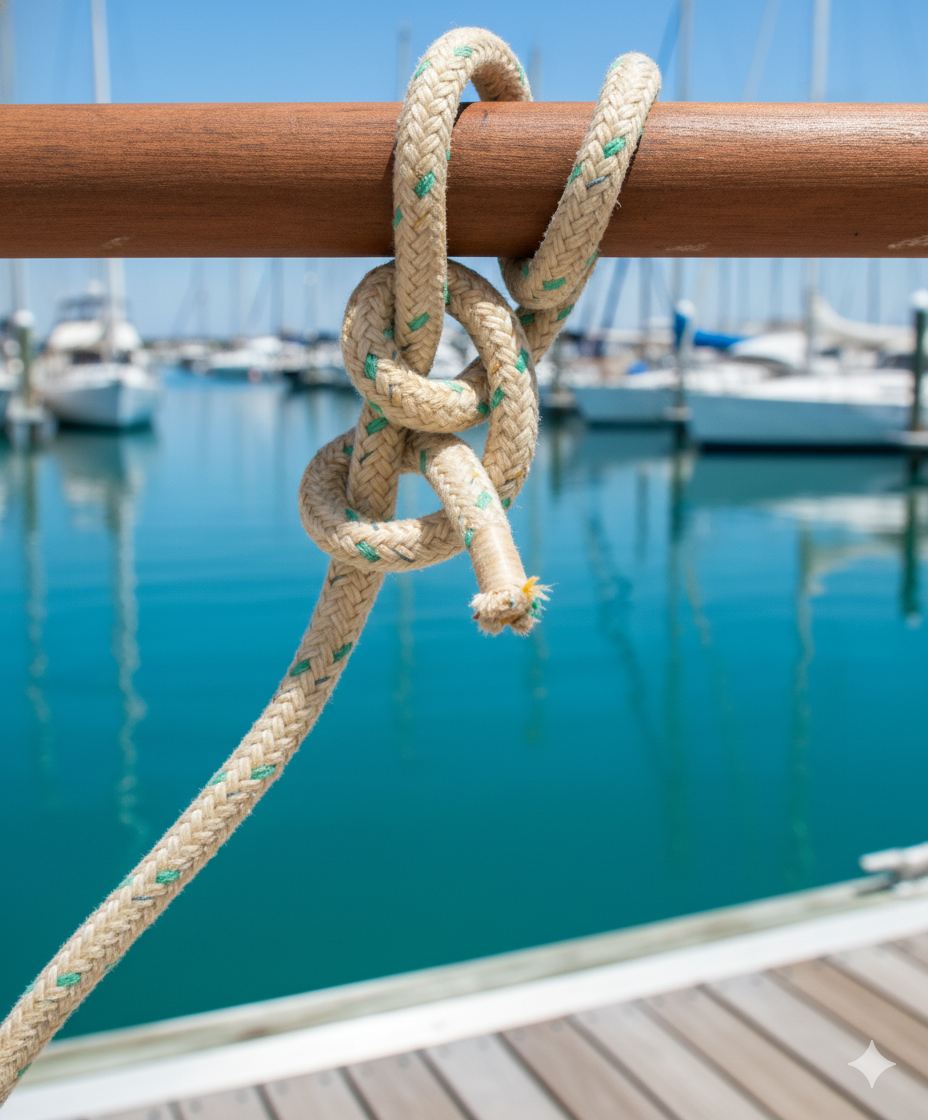
Round-Turn & Two Half-Hitches
This is one of the most reliable hitches available, often used for mooring or anchoring where the line is subject to repeated jerking or heavy loads.
Key Function: Securing a line to a fixed object (a piling, ring, or post) with exceptional security and friction.
Instructions:
- Wrap the working end around the object twice to create a ‘Round Turn’. This provides the necessary friction to take the initial load.
- Bring the working end over and around the standing part of the line, passing it back through the loop created to form the first ‘Half-Hitch’.
- Repeat this action to form a second ‘Half-Hitch’, ensuring it is tied in the same direction as the first.
- Pull the standing part and the working end tightly to snug the two Half-Hitches against the Round Turn.
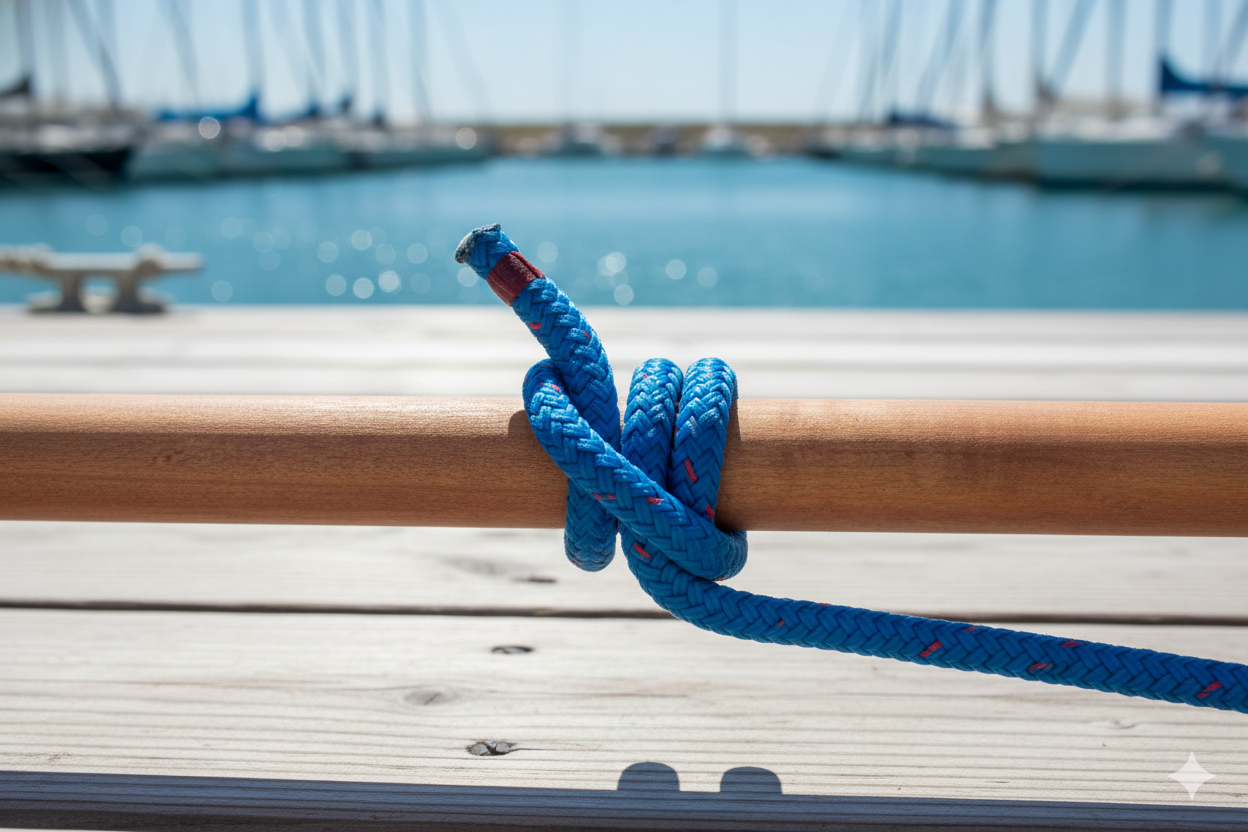
Rolling Hitch
This knot is designed to grip a line or a pole when the pull is almost parallel to the object being gripped.
Key Function: Attaching a line to another rope under tension (such as a spring line) or to a mast, allowing for adjustments along its length.
Instructions:
- Take the working end around the object (or other rope) and loop it back over its own standing part.
- Repeat this action, making two full turns that stack neatly together.
- Now, bring the working end around the object for a third time, but this time, pass the end back over the standing part and tuck it through the final loop, forming a Half Hitch.
- Ensure that the first two turns wrap correctly over the standing line, securing the grip in place.
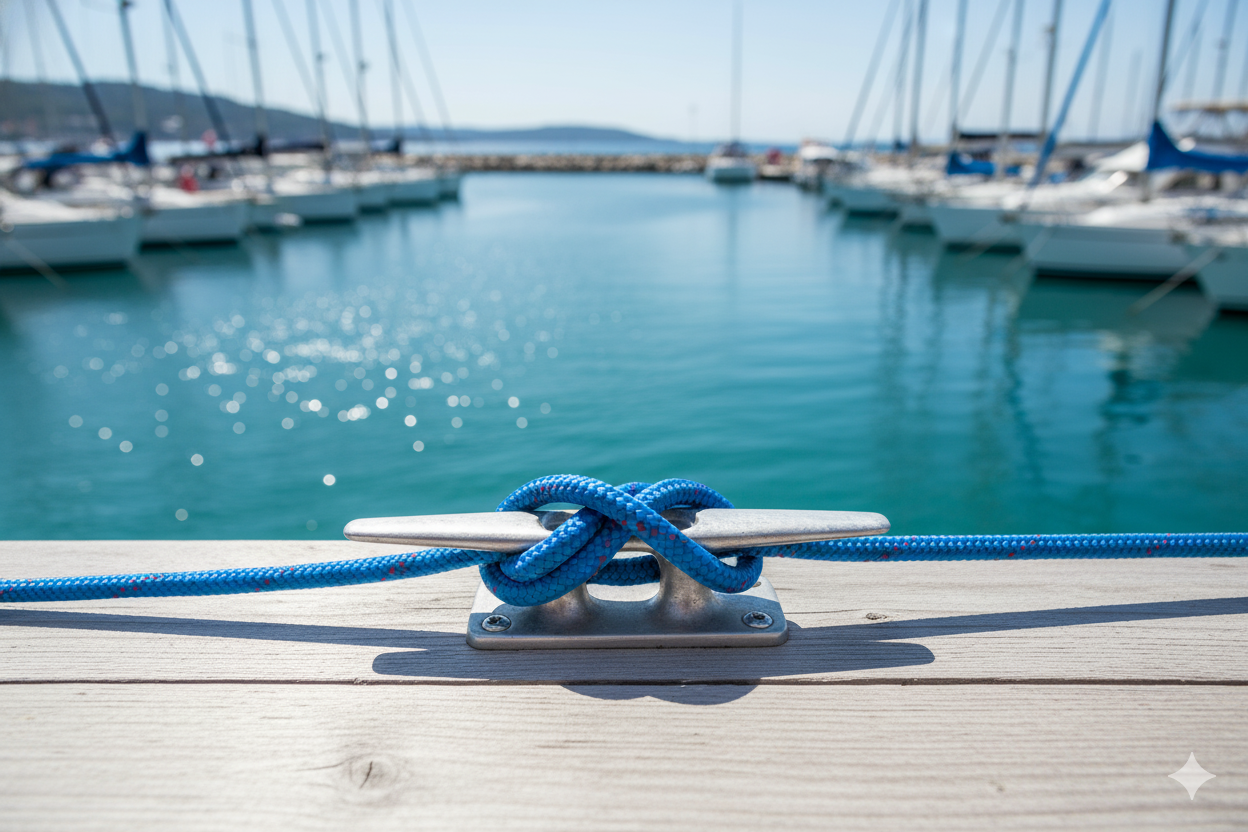
Cleat Hitch
A crucial knot for securing dock lines or halyards to the familiar figure-eight shape of a cleat. Tying this correctly ensures maximum holding power and quick release.
Key Function: Securing a line to a deck cleat.
Instructions:
- Lead the line onto the cleat and make a full turn around the base, starting with the horn furthest from the direction of pull.
- Take the line in a diagonal motion across the centre of the cleat and wrap it around the opposite horn.
- Continue this figure-eight pattern back across the centre and around the first horn again.
- For the final, locking turn, take the line across the centre, then twist a loop in the working end so that it hooks over the cleat’s horn, ensuring the line tucks under itself to lock the final cross.
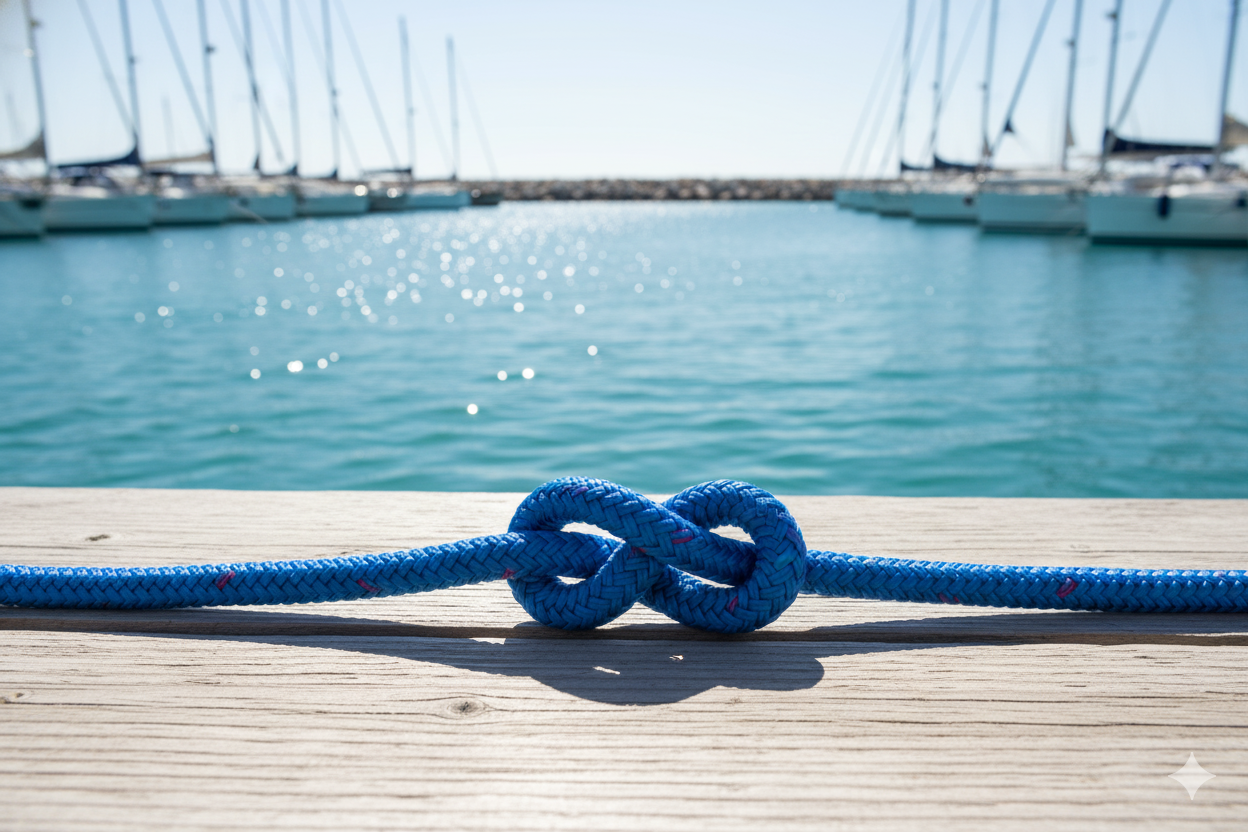
Figure-Eight Knot
While the Figure-Eight can be used in other applications, its most vital role is as a non-jamming stopper. Unlike the simple overhand knot, the Figure-Eight is rounded and will not bind under heavy load, making it easier to untie when required.
Key Function: Creating a bulky, reliable stopper at the end of a line.
Instructions:
- Form a bight (a loop) in the line.
- Take the working end and pass it up over the standing part of the line.
- Bring the working end behind the standing part and then up through the loop you created in step one.
- Dress and tighten the knot by pulling both the standing part and the working end simultaneously. The resulting shape should distinctly resemble the number eight.
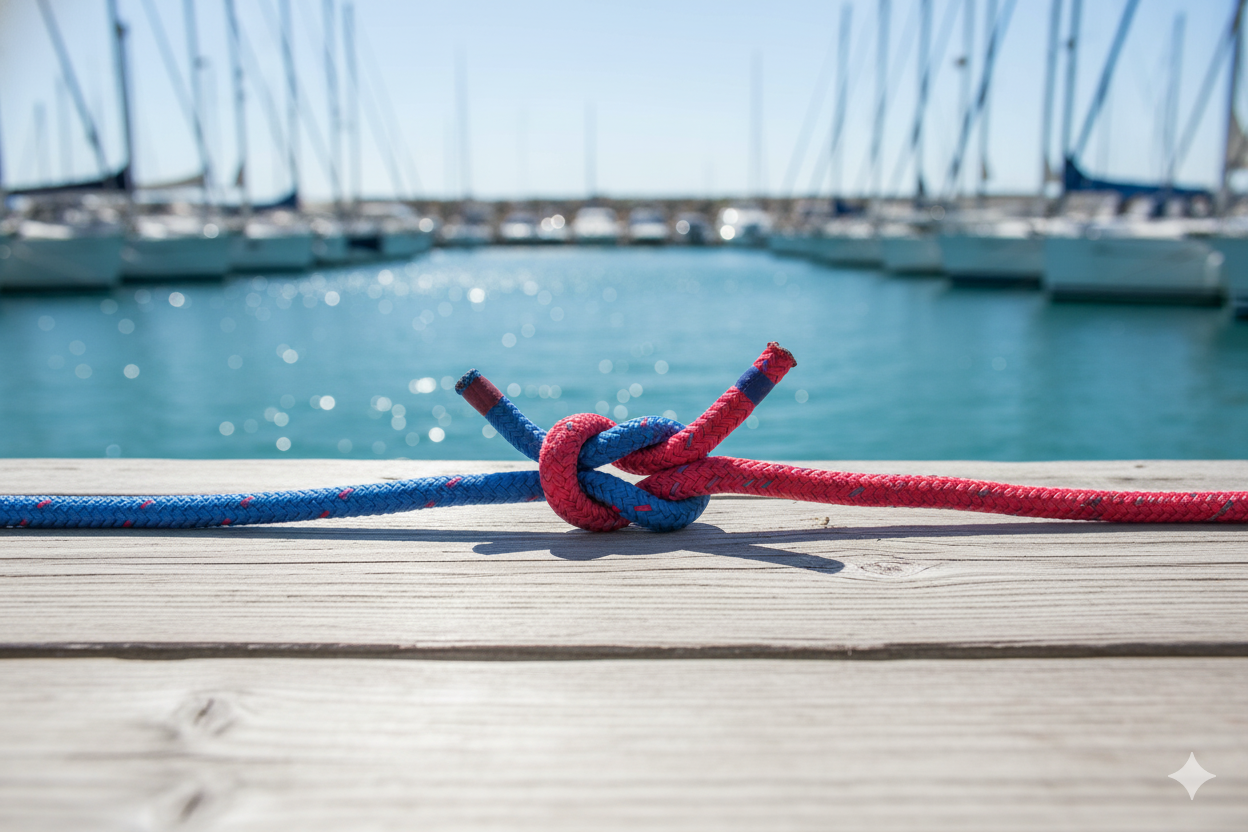
Square Knot
The Square Knot is fundamentally a binding knot. Although simple, it is critical to note that this knot must never be used to join two lines that are under heavy tension or are safety-critical, as it can easily slip under strain.
Key Function: Reefing a sail or securing a package or sail cover
Instructions:
- Take the working ends of the two lines you intend to bind.
- Cross the right-hand line over the left line, then tuck the end underneath. Pull it snug to form the first half of the knot (a Half Knot).
- Next, cross the line that is now on the right over the line on the left, and pass the end underneath again. This is essentially “right over left, then left over right.”
- Pull both ends of the knot firmly to dress it. When correctly tied, the working ends and the standing parts should emerge parallel to each other.
Shop high-quality sailing rope at P&B
You have now gained practical insight into eight of the most vital knots in a mariner’s repertoire. With practice, these essential techniques will become second nature, ensuring your efficiency and, most importantly, your safety, regardless of the conditions.
To ensure your newly mastered knots hold fast, you need quality sailing rope that offers the right combination of strength, grip, and durability.
Shop high-quality sailing rope from trusted and reliable brands, including Marlow Ropes and Kingfisher, at P&B and equip your vessel with the very best lines.
Comments are closed here.